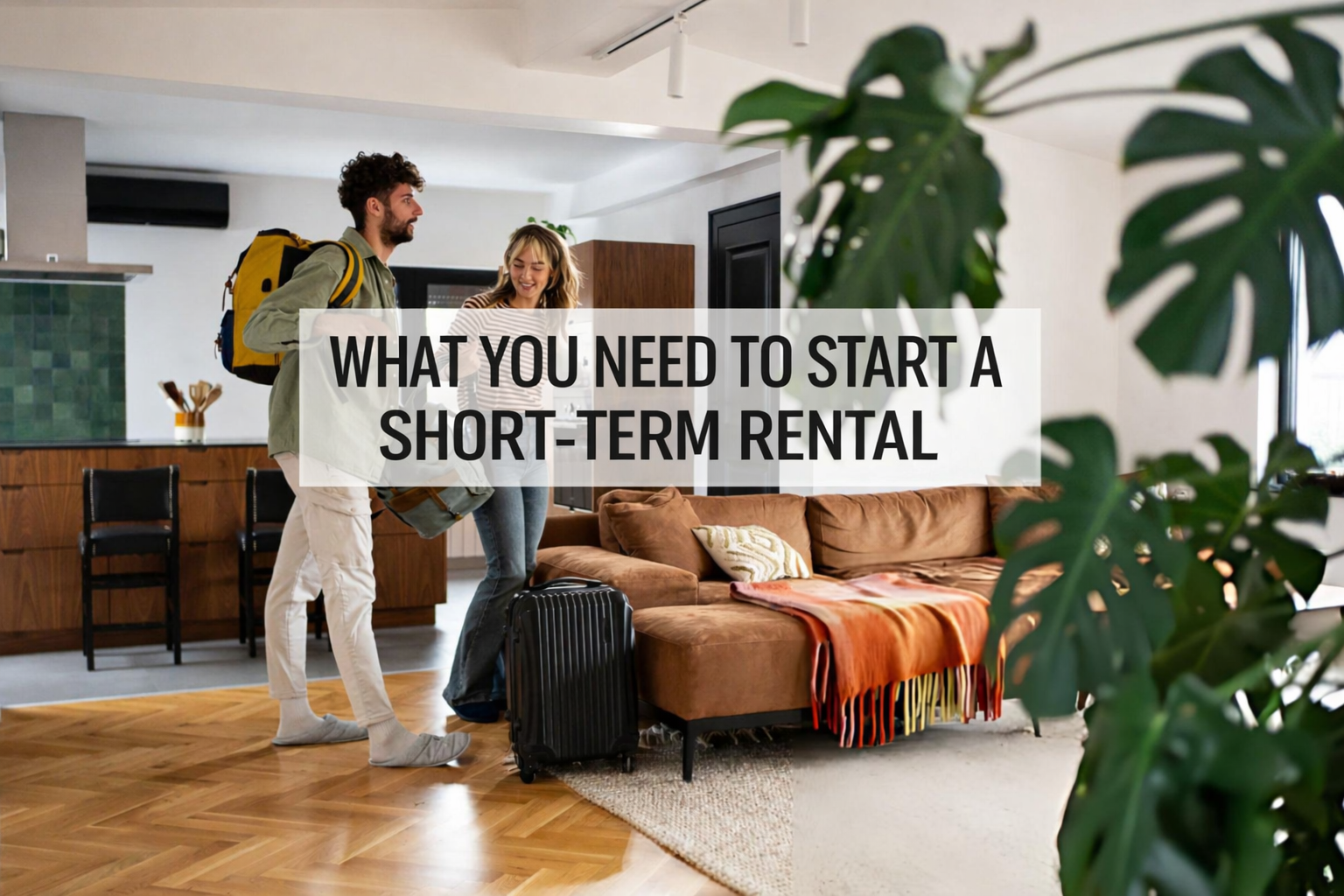
When starting a short-term rental, it is not merely a matter of owning an unsold area. It involves planning, preparation, and the correct mentality. The failure of many new hosts is not due to poor sites; rather, they lacked the basics from the start.
What You Need to Start a Short-Term Rental
This guide explains how to get started with a short-term rental in a clear, practical way. It is also about actual needs, not assumptions, and that is why you can begin doing it with confidence and save yourself the foolish expenditures.
A Property You Are Allowed to Rent Short Term
The first is a property where short-term rentals are permitted. This may be a house you are living in, an apartment that you have rented, or a spare room in your house. Firstly, ensure that local legislation permits short-term rentals in your area. Registration/permits/frequency/limit. There are cities that either require registration or permits or limit the frequency of hosting. There is no point in renting without authorization.
A Clear Purpose for Hosting
You must understand the reason why you are initiating a short-term rental. Some hosts want additional income, others want to cover bills, and others intend to expand into a business. Prices, level of effort, and set-ups are dependent on your objective. Other hosts who lack a clear explanation tend to give up easily. When you have a sense of purpose in life, it becomes easier to make choices and set reasonable expectations.
A Clean, Functional Living Space
Visitors are looking to be served in a clean, secure, and complete space. This is not a luxury but something everyone must do. The floors, dashed walls, and furniture must be in a good state. Door and window ordinances must open and close effortlessly. Plumbing, electrical, and lighting systems should be functional. An operational room discourages grievances and secures your reviews.
Basic Furniture and Guest Comfort Items
All short-term rentals require simple furniture. This includes a comfortable bed, a seat, a table, and storage. Guests are also expected to provide clean bed linen, pillows, blankets, and towels. Style is less important than comfort. A stay can be ruined by an uncomfortable bed, despite the nice decorative appearance. Having easy comfort and good sleep quality should be prioritized before adding extras.
A Fully Equipped Bathroom
Bathrooms are among the most essential areas for visitors. You must have running hot water, good water pressure, and drainage. Sell toilet paper, soap, shampoo, and clean towels. The shower room must be light, hygienic, and convenient. Bad conditions in the bathroom are among the quickest ways to get negative reviews.
A Simple but Usable Kitchen Setup
If your rental has a kitchen, it should be prepared. Tourists demand clean dishes, cups, cutlery, and simple cookware. Such appliances as the fridge, stove, and microwave are supposed to be functioning. There is no need to spend on costly products, but what is given must be clean and operable. Even minor kitchen problems can easily annoy visitors.
Safety Features You Cannot Skip
Safety is not optional. Most places must be equipped with smoke alarms, secure locks, and good lighting. There should be a first-aid kit and a fire extinguisher readily accessible. Easy access to exit and emergency guidelines makes the guests feel secure. Safety is not only a problem in reviews but also a legal concern. Adequate security arrangements provide you and your guests with protection.
Reliable Internet and Utilities
The majority of guests would want good internet connectivity. Unstable and slow connections frequently cause complaints, particularly among people travelling for work. There should be consistency of water, electricity, heating, or cooling. Check it all yourself before guests arrive. Utility issues during a stay can cause stress and bad reviews, even when you are not in full control.
A Clear Pricing Plan
You must have a pricing strategy before listing your rental. Survey rental rates at your locations to understand market rates. Think about your costs, demand, and seasonality. New hosts make wrong prices, either overpriced or underpriced. An effective pricing strategy attracts guests while covering costs. Pricing need not be permanent; it can be elastic.
A Well-Written Listing Description
Your listing description must feature an outline of what you are selling to your guests. Be honest and specific. Note the number of visitors, available parking spaces, and any restrictions. Avoid overpromising. Unambiguous descriptions will minimize confusion and attract the appropriate guests. One of the components you must have to start a short-term rental successfully is a strong listing.
Clear House Rules and Boundaries
House rules save your time and property. Noise, smoking, pets, additional guests, and check-out expectations should be covered. They are to be stern yet justifiable. Good guidelines are used to set boundaries and minimize conflict among guests. In the absence of rules, hosts often struggle with inappropriate conduct.
A Cleaning System You Can Maintain
You play needing a proper cleaning scheme. This may be self-washing or contracting a servant. There should be cleaning between all stays. Cleanliness is noticeable to guests at first sight. Lack of a proper cleaning system results in negative reviews and stress. Speed is not as important as consistency.
A Way to Handle Maintenance Issues
Things will break. Electric lights go out, door knobs become loose, and machines are breaking down. You must have a strategy to resolve issues fast. This may be simple tools, some repair connections, or service agents. Late maintenance has implications for customer experience and the property’s future state. Remedy lowers panic when it arises.
Strong Guest Communication Skills
One of the requirements is communication. You have to answer questions, hand out instructions, and manage issues in a cool and collected way. Effective communication minimizes misunderstanding and fosters trust. Many guests consider the host to be equal to the property. Bad communication is considered one of the major triggers of negative reviews.
Time or Help to Manage Hosting
Rentals that are short-term are time-consuming. Even automated systems cannot be monitored. You should deal with reservations, cleaning time, and customer communications. You can be in need of assistance if you do not have time. It is a burnout and error to host without sufficient time. Practice what you can do beforehand.
Financial Tracking and Records
You need a simple system to monitor money coming in and out. Thanks to this, you know what profits are, and you are doing taxes. Cleaning up of tracks, repair, utilities, as well as platform fees. Hosts who fail to track finances tend to underestimate their costs. The records are what will help you make a better decision in the long term.
Realistic Expectations About Hosting
At the beginning, hosting is not an active source of income. It requires hard work, training, and time. Some months will be more successful than others. Depending on their needs, guests will differ in terms of their personalities. The realistic expectations prevent the frustration. The secret of success is not perfection, but consistency.
A Willingness to Improve Over Time
The last requirement is the desire to learn. No host starts perfectly. The process includes feedback, errors, and corrections. Gradually but surely, hosts do a better job than rushers. It is not the shortcuts, but the experience that brings growth.
Conclusion
Furniture and listings are only the tip of the iceberg of what you need to begin a short-term rental. It is made up of preparation, systems, mindset, and responsibility. It is then easier to be a host after you have the right background. A temporary house could be a profitable and successful source of income with the right organization, regulations, and proper maintenance.